Hardware Wallet Master Guide
Trezor.io/start: The Definitive Guide to Taking Full Control of Your Crypto
Trezor.io/start is the official and safest starting point for setting up a Trezor hardware wallet. This guide walks you from zero knowledge to confident self-custody, explaining not only the setup process but the philosophy behind owning your crypto independently.
Why Trezor.io/start Is the Only Correct Beginning
Cryptocurrency was created to remove middlemen, yet many users unknowingly rely on exchanges and apps that control their private keys. In crypto, control equals ownership. If someone else holds your keys, they ultimately hold your assets.
Trezor.io/start exists to solve this problem from the very first step. It ensures your Trezor device is genuine, your firmware is authentic, and your wallet is generated completely offline. This process removes trust from companies and places it back into cryptography and personal responsibility.
Trezor.io/start exists to solve this problem from the very first step. It ensures your Trezor device is genuine, your firmware is authentic, and your wallet is generated completely offline. This process removes trust from companies and places it back into cryptography and personal responsibility.
A Simple Way to Think About It
Keeping crypto on an exchange is like leaving your valuables in a public locker. Using a Trezor wallet is like installing a private safe in your own home — only you have the combination.
What Happens When You Visit Trezor.io/start
Device Connection
Connect your new Trezor device to a trusted computer. A legitimate Trezor never arrives preconfigured or with a recovery seed included.
Install Trezor Suite
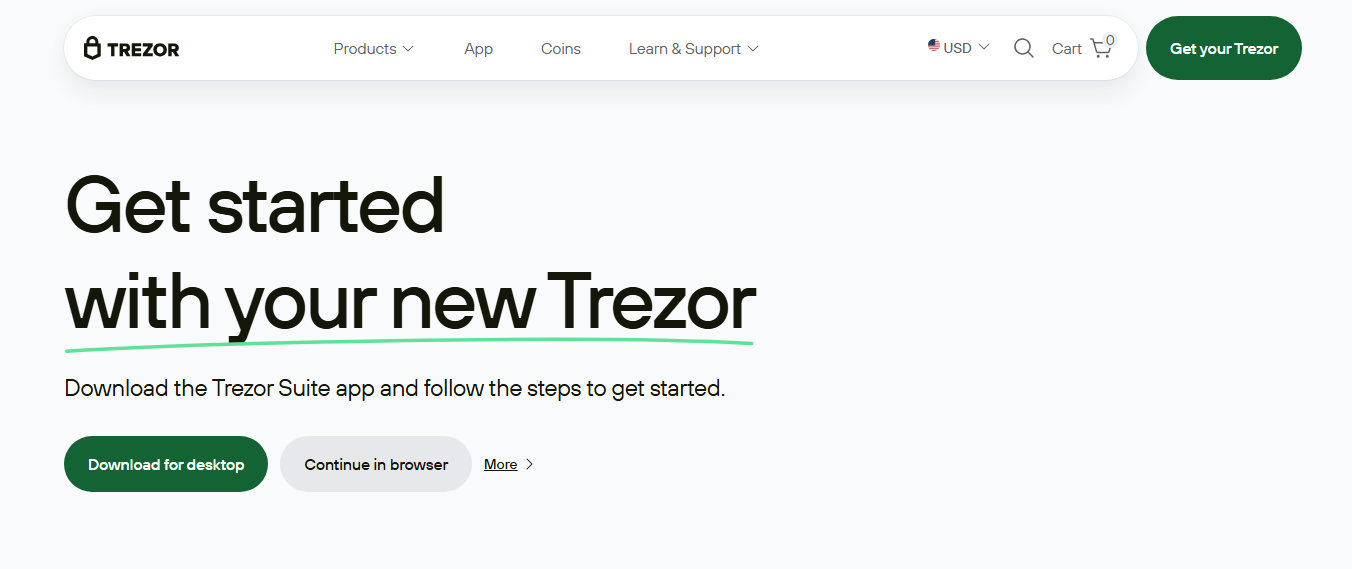
Trezor.io/start directs you to download Trezor Suite, the official software used to manage assets and verify device integrity.
Firmware Installation
The latest firmware is installed directly onto the device, ensuring the highest security standards are active from day one.
Wallet Creation
Your Trezor generates private keys internally and displays a recovery seed directly on the device screen — never online.
The Recovery Seed: Your Crypto Lifeline
The recovery seed is a sequence of 12 or 24 words that mathematically recreates your wallet. It is the ultimate backup and the only way to restore access if your device is lost, damaged, or replaced.
Trezor never stores this seed. No update, website, or support agent will ever ask for it. Writing it down offline and protecting it from theft, fire, and water is the most important step in the entire setup process.
Trezor never stores this seed. No update, website, or support agent will ever ask for it. Writing it down offline and protecting it from theft, fire, and water is the most important step in the entire setup process.
Trezor vs Keeping Crypto Online
Security Aspect
Trezor Wallet
Online Platforms
Private Key Control
User-owned
Company-owned
Internet Exposure
Offline (cold storage)
Always online
Failure Risk
Independent of companies
Dependent on platform solvency
Supported Assets and Crypto Use Cases
Trezor supports Bitcoin, Ethereum, Litecoin, Cardano, and thousands of tokens. Through Trezor Suite and compatible Web3 tools, users can send and receive assets, track portfolios, and securely interact with decentralized finance applications.
Advanced users can manage NFTs, connect to decentralized exchanges, and sign smart contract transactions without ever exposing private keys to the internet.
Advanced users can manage NFTs, connect to decentralized exchanges, and sign smart contract transactions without ever exposing private keys to the internet.
Common Questions About Trezor.io/start
Is Trezor.io/start required?
Yes. It ensures authentic software, firmware verification, and safe wallet initialization.
Can my computer be infected?
Even if your computer has malware, transactions must be physically approved on the Trezor device.
Is Trezor beginner-friendly?
Absolutely. Trezor.io/start is designed to guide first-time users step by step.
Advanced Protection for Long-Term Holders
Trezor supports optional passphrases, hidden wallets, and multisignature setups. These features allow users with significant holdings to add layers of protection that scale with their portfolio.
Final Thoughts on Trezor.io/start
Trezor.io/start is more than a setup page — it is a commitment to true crypto ownership. By following it carefully, you eliminate unnecessary trust, reduce risk, and take responsibility for your financial future.
In a digital world where mistakes are irreversible, starting with proper self-custody is essential. Trezor.io/start ensures your crypto journey begins with clarity, security, and confidence.
In a digital world where mistakes are irreversible, starting with proper self-custody is essential. Trezor.io/start ensures your crypto journey begins with clarity, security, and confidence.